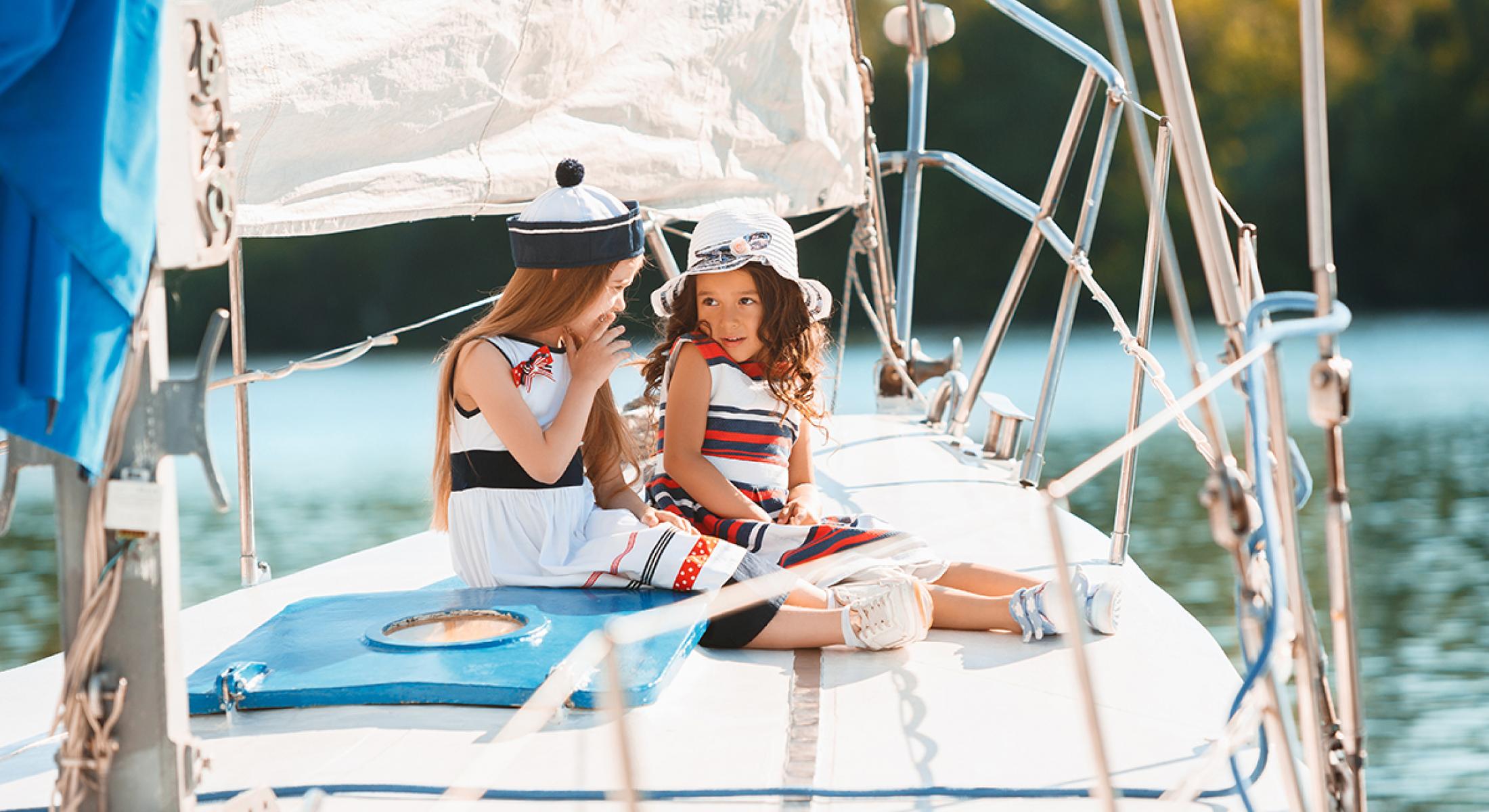
Taking a child on a boat for the first time can raise some concerns, even for the most athletic and adventurous parent. What happens if the child gets seasick? What should you pack? How can you ensure that the boat has all the necessary safety devices for a child?
And what if they get bored?
Children see everything with different eyes than we do, so we shouldn't worry too much if our child doesn't have playmates on the boat or can't engage in all the activities they're accustomed to. Often, we forget that discovering and exploring, for a child, is the most exciting game of all: even the small berths or the gentle rocking of the boat become the backdrop for new and fun imaginative games.
Accompanying a child to become more familiar with the sea, diving, and using a snorkel is the key to ensuring that they also have the maximum fun. After all, what could be more beautiful than discovering a new world with mom and dad?
What are the main safety measures for a child?
It is very important to allow children to experience their first boat adventure safely and calmly, helping them with simple rules to prevent falling or slipping. After all, children are much better than us at adapting to different spaces and balances, and it is important that they can remember the rules for moving in complete safety on their own.
The main rules to give a child during their first experience are:
- Don't walk on the lines: this rule will help them not to slip or get entangled.
- "One hand for you, one hand for the boat" is the saying that all children are taught on board. It means holding on as much as possible when moving on board, leaving one hand free in case of a fall.
- Life jackets during navigation if the child cannot swim.
- Safety net: just request it, and our team will install a protective net to prevent slips into the sea.
What if the child gets seasick?
If your child can read, draw, or watch a screen while sitting in a car, it is very likely that they will have no problem on the boat either. However, even the most devoted sailing adults can experience a bit of seasickness in certain conditions. The important thing is to avoid acidic foods, look at the sky, and listen to your body's needs. Many people become drowsy and feel like lying down, while others prefer to sit upright in the open air and breathe in the fresh air. Let the child adapt to their needs, give them something dry to eat like crackers or light cookies. Often, these episodes occur in the first two days of sailing but disappear as the body gets used to the new condition. The key, in these cases, is not to succumb to worry and to convey as much calmness as possible to the child.
Games and Entertainment
One of the most useful things to help a child swim in deep water and not miss the beach is classic inflatable games. They will become travel companions and provide valuable support to the child who is swimming in a sea where returning to the shore is not possible. Children are curious and easily connect the boat to the world of pirates, so they will be excited about the idea of learning knots, the names of boat parts, and having small roles like removing fenders or occasionally checking the towline.
In short, a child should be more of a reason to choose a boat trip than an obstacle. In addition to giving them a unique experience, it will be even easier to find games and activities to spend some quality family time without distractions. An opportunity not to be missed!